Your ECU already knows. Now you can see it.
A 1.75-inch round AMOLED dash that reads ECU Master EMU Classic directly — the ECU's own data stream, up to 50 frames a second, on a screen you can actually read at speed.
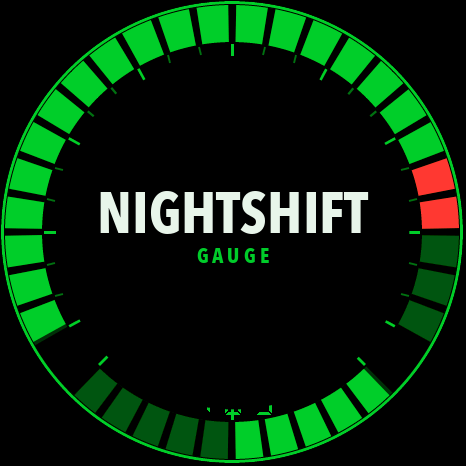
Nightshift Gauge
What it is
One screen instead of a laptop on the passenger seat
An EMU Classic tracks over two hundred channels. A stock cluster shows you four of them, and none of the ones that end engines. Nightshift Gauge sits between the two: it plugs into the ECU's serial port, parses the raw 260-byte frames, and draws what you chose to watch.
No app, no account, no cloud. The gauge serves its own settings page over Wi-Fi — you open it from your phone in the paddock, change what a slot shows or what a warning threshold is, and it takes effect immediately.
The screens
Seven screens today, and the list keeps growing
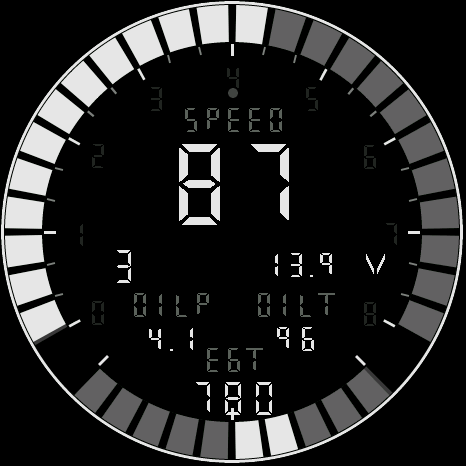
Swipe between them, choose which ones are in the rotation at all, and reassign every readout. Captured straight out of the firmware's renderer — these are the exact pixels the panel draws, not mock-ups.
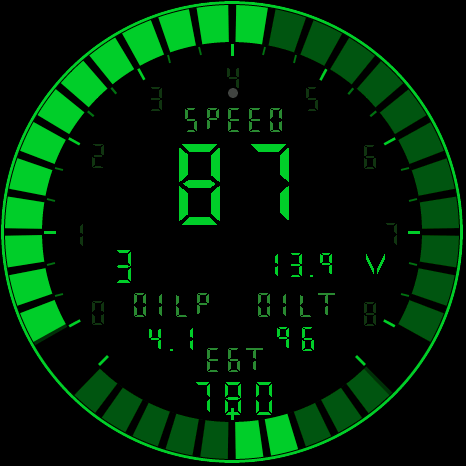
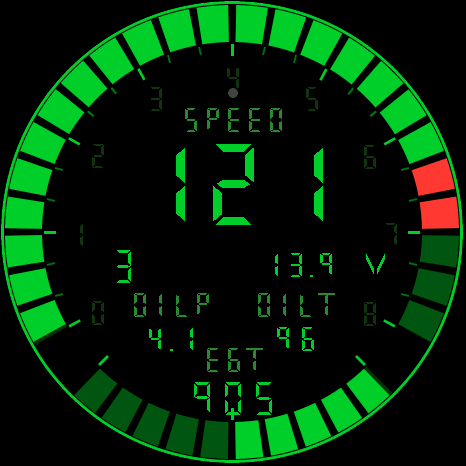
Attack
Speed and gear big, oil pressure and temperature, EGT and battery around them, RPM on the rim and boost across the bottom. Segments turn red past your redline.
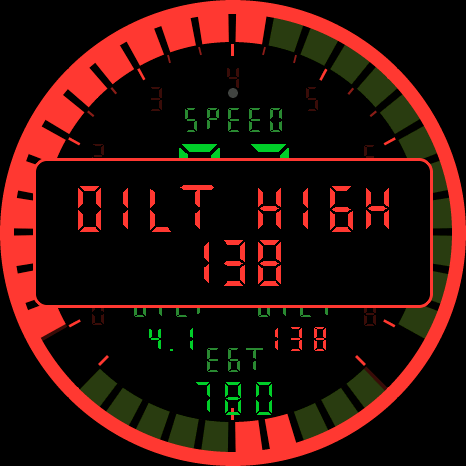
Alarm
The whole face pulses red and names the channel and the value. You do not have to work out what went wrong.
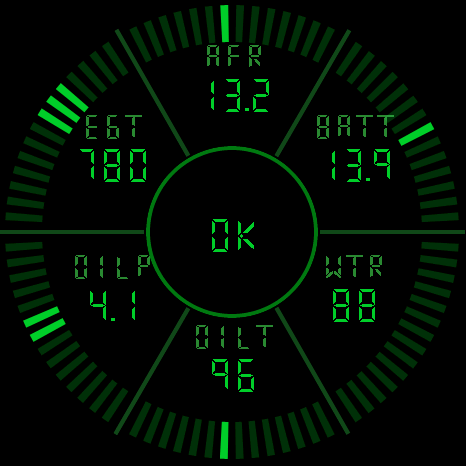
Info — arcs
Six health channels as deviation from normal. A glance tells you whether anything is drifting.
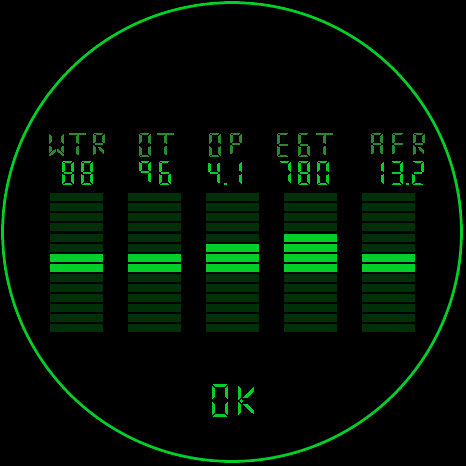
Info — bars
The same six as columns, for people who read a bar faster than an arc.
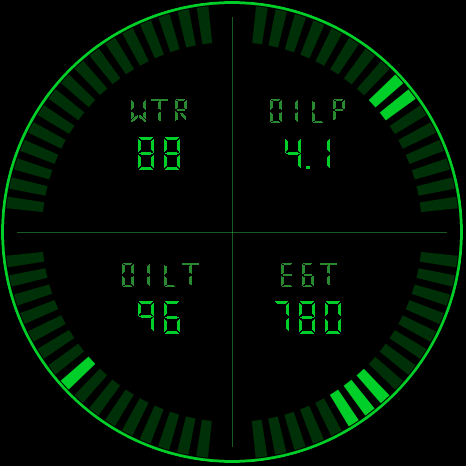
Info — quad
Four channels, big. Water, oil pressure, oil temperature, EGT.
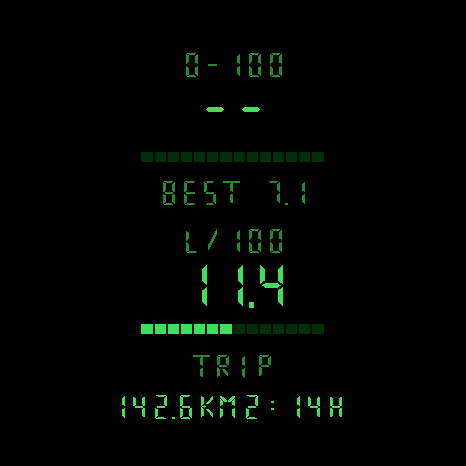
Stats
0–100 timer with a best, fuel consumption now and for the trip, distance and moving time.
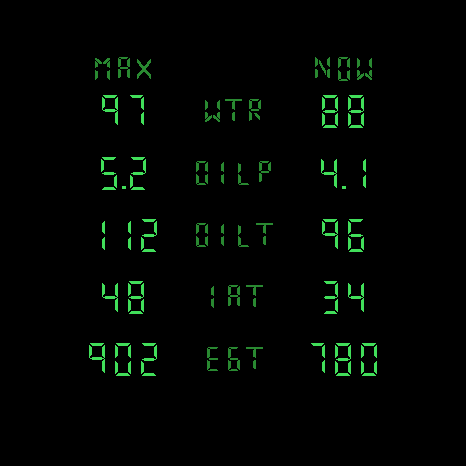
Temps
Water, oil, intake and exhaust — each with the maximum it hit since you set off.
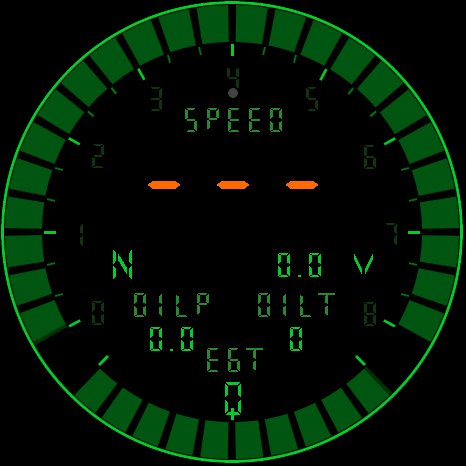
No ECU
When the link drops it says so, in orange, instead of freezing on the last number it saw.
Make it yours
Four palettes, three gauge faces, or colours you mix yourself
Switch from your phone — no reflash, no reboot. The faces are drawn by the firmware rather than stored as images, so a palette change restyles every tick, every band and every digit at once.
Classic
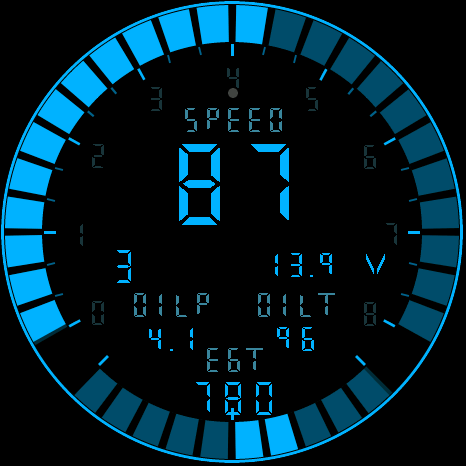
Ice
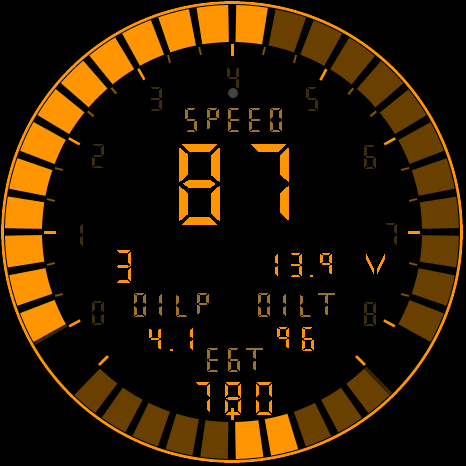
Sunset
Mono
What it does
Built for the car, not for the spec sheet
Direct
Reads the EMU itself
EDL-1 serial, 260-byte frames at 115200 baud. No CAN adapter, no OBD dongle, no interpretation layer between you and the ECU.
Alarms
Safe limits you set yourself
You type the warning and critical value for each channel, with hysteresis so a number sitting on the line does not strobe. Critical pulses the whole face red and names the channel. Any rule you do not want, you switch off.
Yours
Set up for how you drive
Every readout is a slot: pick which channel goes where, hide the ones you never look at, choose the palette and the gauge face, and decide which screens are in the swipe order at all.
Portal
Full telemetry in the browser
The gauge serves its own site over Wi-Fi: every channel live, charts of the last few minutes, the log download, and every setting on the device. Phone or laptop, nothing to install.
Updates
Over your phone's hotspot
New firmware goes on over Wi-Fi. If an update ever fails to boot, the gauge falls back to the version that worked.
Logging
CSV to a microSD, optional
Four samples a second, downloadable and chartable in the browser. The gauge works exactly the same with no card in it.
Speed
Calibrated against GPS
Three-point calibration in the browser works out your speed factor, so the number matches reality on your gearing and tyres.
Still being built
And whatever you ask for next
Screens, channels and warnings get added as people ask for them — a clock and a lap timer are on the bench right now. If your car needs something this does not do yet, say so; that is most of how the list gets written.
Will it work on my car
Honest status, not a wish list
Where it came from
Four rebuilds, eighteen months, mostly after midnight
This started as a fix for my own car and stayed a nights-and-weekends project. The name is not a metaphor.
The first one, which was bad
A microcontroller, a square screen, and a stubborn belief that reading an ECU could not be that hard. It worked for about a minute at a time.
Two rewrites in a week
Version two got the protocol right and the display wrong. Version three got the display right and ran out of memory. Both taught me what the third rewrite needed to be.
Started over on purpose
Round AMOLED, a proper dual-core split — one core doing nothing but draining the serial port, the other drawing — and a UI written by hand instead of exported from a tool.
Open beta
Two hundred and sixteen commits later, it holds a steady picture on a real engine and updates itself over a phone hotspot. That is the point where other people's cars stop being a bad idea.
Who is behind it
One person, one workbench

I am a software engineer in Poland with a Miata and an EMU, and I built this because I wanted it in my own car. There is no company behind it — the firmware, the case, the wiring loom and this page are all mine, and when you message the account, I am who answers.
That is the honest trade of buying from a one-person shop. You get someone who will actually fix the thing you found, and change it because you asked. You do not get a support department or next-day replacements.
Open beta
I am looking for a few cars that are not mine
What you get
- A complete kit — gauge, case, loom, ready to plug into the EMU's serial connector.
- Firmware updates over the air for as long as the thing exists.
- Direct line to me, and a real say in what gets built next.
What I ask
- Run it and tell me what breaks, what is unreadable, what you wanted and could not find.
- One photo of it in your car that I can post.
- Patience — it is beta firmware in a car, and the alarms are the part I care most about getting right.